
Quick Summary
Flexco Alligator is a well known mechanical fastening system used to join the two ends of conveyor belts and power transmission belts using hinged metal plates, staples and a hinge pin. Its main product, Alligator lacing, is a one-piece metal strip with teeth that bite into the belt, joined by a hinge pin, and it can be fitted with just a hammer. It is popular because it is quick to install, easy to replace and strong enough for many everyday belts. This guide explains how it works, the main sizes, the materials, how to choose the right one and how to install and care for it, so that you can avoid downtime and failed splices.
Table of Contents
What Is a Flexco Alligator Fastener?
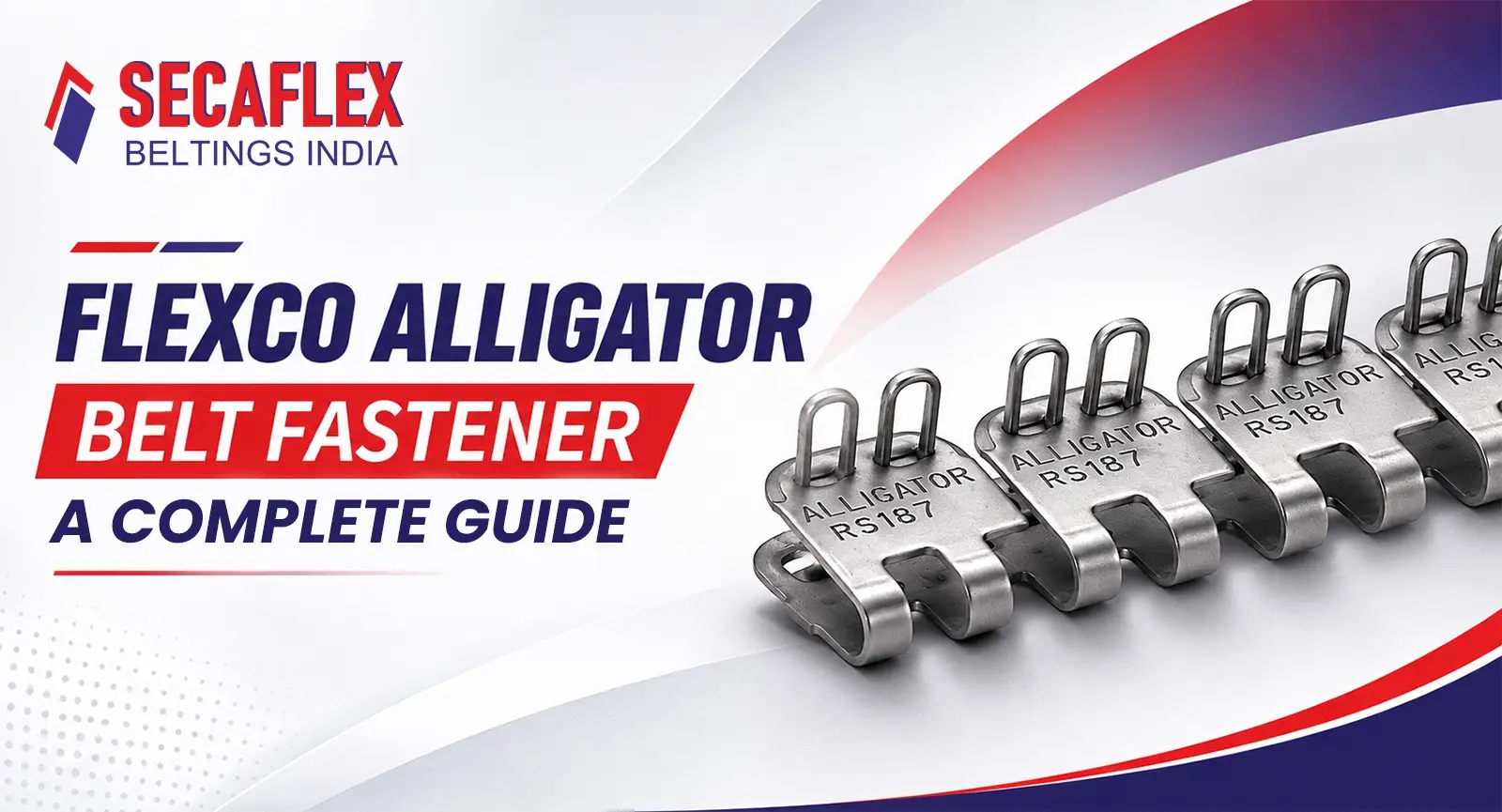
The Flexco Alligator is a family of mechanical belt fasteners made by Flexco, a US company known for making belt fastening and conveyor products. Alligator is its range of mechanical belt fasteners. The fasteners are metal strips with hinged plates that grip both ends of the belt. The two ends are then joined by sliding a hinge pin through the loops. The best known is Alligator lacing, a continuous, one-piece strip of metal teeth made to suit any standard belt width. It gives a low profile joint that passes smoothly over pulleys, and the installation is quick and simple.
The type most people ask about is the Alligator Ready Set staple fastener. In this design, the staples come pre-inserted in each fastener strip. The installer does not need to load loose staples into a tool, which removes one step from the job and saves time.
How Does a Flexco Alligator Work?
The idea is simple and sturdy.
- The belt ends are cut square.
- A fastener strip is placed on each belt end.
- The staples are driven through the belt and clinched, so that the plates grip it firmly.
- The two belt ends are brought together, so that the hinge loops line up.
- A hinge pin is slid through the loops, which locks the two ends together.
Because the joint is hinged, the belt can bend around pulleys without breaking the splice. The joint can also be opened again by removing the pin, which makes repairs and belt changes easier.
Types of Alligator Fasteners
The range covers different belts and duties.
- Alligator lacing: The classic one-piece strip, in steel or stainless steel, for light to medium duty conveyor belts. It suits belts from very thin up to about 12 mm.
- Alligator staple fasteners: A staple style fastener for light duty belts, common in food processing and logistics.
- Alligator V-belt fasteners: Hinged fasteners for V-belt drives on machines. They grip the belt ends without touching the pulleys, using staples or nails that are folded over.
Each type is made for a certain belt thickness, tension, and pulley size, so match it to your belt.
Main Sizes: RS62, RS125 and RS187
Alligator fasteners come in several sizes, matched to the thickness of the belt and the size of the pulleys. Here are three common ones. Always check the latest data sheet from the manufacturer before ordering.
- RS62: for thinner belts, about 1/16 to 1/8 inch (1.5 to 3.2 mm) thick. It suits small pulleys, with a minimum diameter of around 2 inches (50 mm), and has a lower maximum belt tension.
- RS125: for medium belts, about 1/8 to 3/16 inch (3.2 to 4.8 mm) thick. It needs a minimum pulley diameter of around 3 inches, and handles a higher belt tension.
- RS187: for thicker belts, about 3/16 to 1/4 inch (4.8 to 6.4 mm) thick. It needs a larger pulley, with a minimum diameter of around 4 inches, and carries the highest tension of the three.
The bigger the belt thickness, the bigger the fastener, the pulley and the tension rating. Never force a fastener onto a belt outside its range.
Materials and Hinge Pins
The environment decides the material.
- Steel: the standard choice for general use in dry and normal conditions.
- Stainless steel (Type 316): resists rust and corrosion, and suits wet areas, washdowns and food processing.
- Magnetic stainless steel (Type 430): useful where metal detection or magnetic detection is part of the process.
- Special alloys: some sizes are also available in strong alloy versions for tougher duty.
The hinge pin matters as well. Options include steel spring wire, nylon-covered steel cable and stainless versions of these. A cable-type pin is flexible and common, while a wire pin can suit other belt designs. Match the pin to the fastener and the environment.
Where Flexco Alligator Is Used
Mechanical fasteners like these are used on many fabric conveyor belts in everyday industry.
- Aggregate, sand and gravel handling
- Recycling and waste handling
- Packaging and warehouse conveyors
- Agriculture and grain handling
- Food and beverage lines, with stainless fasteners
- Manufacturing plants and workshops
- Mining and quarry support belts, where the belt type and load allow
Very heavy or very high-tension belts may need other splice methods, such as vulcanised joints or heavier mechanical fasteners.
Benefits of Flexco Alligator
- Fast installation: pre-set staples save a step, and the whole splice can be made on site.
- Reduced downtime: a belt can be back in service sooner than with many other splicing methods.
- Easy to repair or replace: pull the pin to open the joint.
- Low profile: the smooth design helps the belt move past scrapers, diverters and shears.
- Flexible joint: the hinge lets the belt bend around pulleys.
- Range of sizes and materials: options for different belts and environments.
- Portable tools: the installation tool is light and can be carried to the site.
How to Choose the Right Fastener
Take these measurements and facts before you order.
- Belt thickness: this decides the fastener size.
- Belt width: to choose the right strip length, or cut size.
- Minimum pulley diameter: the smallest pulley in the system, including tail and tension pulleys.
- Belt tension: the working tension of the belt, compared with the maximum rating of the fastener.
- Environment: wet, corrosive, food, hot or abrasive conditions.
- Pin type: match it to the fastener and your conditions.
- Belt type: fabric belts of the right construction are best suited.
- Tools: the right installation tool and pin-driving tools for the size you chose.
If any of these are unclear, ask your supplier to help you check the data sheet.
Basic Installation Steps
Always follow the manufacturer’s instructions, but this gives you an idea of the process.
- Turn off the conveyor and lock out the power.
- Cut the belt ends square, using a guide. A crooked cut leads to uneven tension and early failure.
- Mark the centre line on the belt, so that the fastener sits straight.
- Position the fastener strip on the belt end, and hold the belt and fastener in the application tool.
- Drive the staples with a hammer, as instructed, until they are fully seated and clinched.
- Repeat on the other belt end.
- Bring the two ends together, and slide in the hinge pin.
- Check the joint is straight, and the belt tracks properly before returning it to normal load.
Buying the Right Flexco Alligator
A belt fastener is a small part, but a failure can stop a whole line. Buy from a supplier who can confirm the product details, give you the data sheet and help you choose the right size. Check the part number, belt thickness range, pulley rating and materials before you order, and keep the paperwork for future reference. If you are looking for a dependable supplier, DKT Engineering Enterprises can help you select and source the right Flexco Alligator fasteners for your belts.
Frequently Asked Questions
What is a Flexco Alligator fastener?
What does Ready Set mean in Alligator fasteners?
What is the minimum pulley diameter for an Alligator fastener?
How do you install an Alligator belt fastener?
Which materials are available for Alligator fasteners?
Can a mechanical belt fastener be used on any conveyor belt?
How long does an Alligator fastener last?
DKT Engineering Enterprises
DKT Engineering Enterprises has vast experience in manufacturing conveyor belts in India. We are providing high quality products to our clients Since 2010.
About Author

DKT Engineering Enterprises
DKT Engineering Enterprises has vast experience in manufacturing conveyor belts in India. We are providing high quality products to our clients Since 2010.