
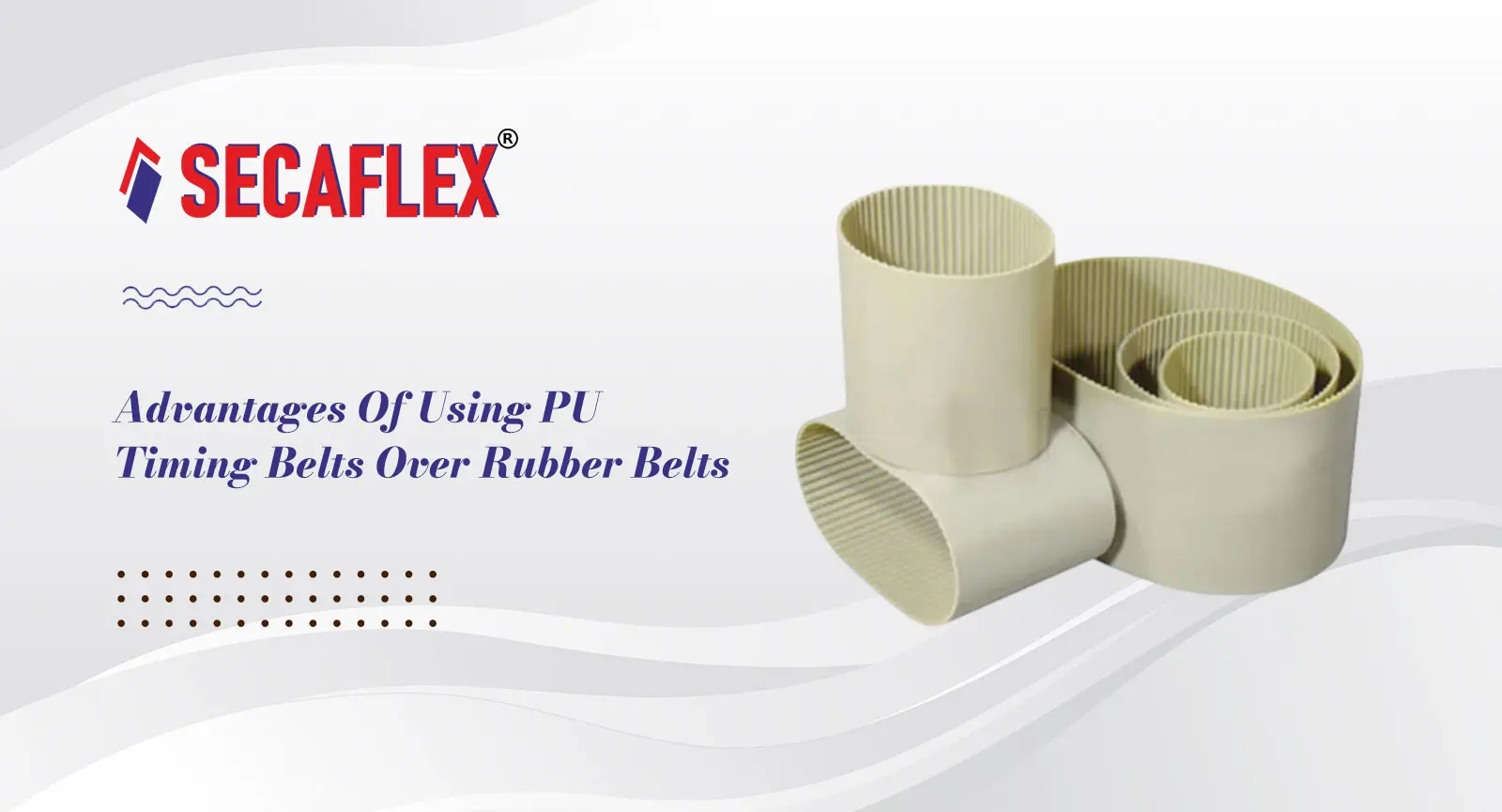
If you manage a production line or handle industrial repairs, you know that the smallest part can cause the biggest problems. A snapped timing belt doesn’t just stop a machine; it stops your profit. For a long time, the standard black rubber belts were the only option. But today, more and more factories are moving toward PU timing belts.
In this blog, we are going to explain exactly what these belts are and why the material makes such a big difference. We will also show you a direct comparison between PU and rubber so you can see which one is the right choice for your specific machines.
Key Advantages of Switching to PU Timing Belts
Here are some PU timing belt benefits over rubber belts:
Superior Strength and No Stretch
Most PU belts are reinforced with high-strength steel or aramid (Kevlar) cords. Unlike rubber, which is elastic and stretches over time, a polyurethane belt stays at the same length for its entire life. This means you don’t have to keep stopping your machines to re-tension the belts.
Resistance to Chemicals and Oils
One of the biggest PU Timing Belt Benefits is its tough skin. It is naturally resistant to oils, grease, and most industrial chemicals. If a machine leaks or needs constant lubrication, a PU belt will keep working perfectly where a rubber belt would melt or crack.
Clean and Dust-Free Operation
Because PU is much harder and more abrasion-resistant than rubber, it doesn’t shed dust. This makes it the only safe choice for clean-room environments. You won’t find black soot all over your machine parts or your final products.
Food-Grade Safety
PU is naturally non-porous and can be made to meet FDA standards. It doesn’t trap bacteria and can be washed down with water and soap, making it essential for the food and beverage industry.
Handles High Speeds Better
PU is stiffer than rubber. This means the teeth of the belt fit perfectly into the pulleys without any sliding. This gives you much better timing, which is vital for high-speed printing or robotic arms.
PU Timing Belts vs Rubber Belts: The Main Differences
To make it easy to understand, here is how the two belts compare on different parameters:
| Feature | Rubber Timing Belt | PU Timing Belt |
|---|---|---|
| Strength | Good, but stretches over time. | Very high; usually has steel cords inside to prevent stretching. |
| Cleanliness | Leaves black dust as it wears down. | Clean and dust-free; perfect for “clean” industries. |
| Oil & Chemical Resistance | Poor; rubber gets soft and breaks when oily. | Excellent; it doesn’t care about oil or grease. |
| Precision | Loses accuracy as the belt stretches. | Stays 100% accurate because the material is stiff. |
| Washable? | No, water and soap can damage it. | Yes, you can wash it down easily. |
Why Material Matters
Rubber belts have been used for decades because they are inexpensive. However, rubber is a natural material that reacts poorly to harsh environments. If your machines work with any kind of oil, grease, or chemicals, a Rubber Timing Belt will eventually soak up those liquids. This causes the rubber to soften, stretch, and eventually jump teeth or snap.
Polyurethane (PU), on the other hand, is a synthetic plastic. It is much tougher and doesn’t react to the environment the way rubber does. It stays firm, keeps its shape, and lasts a lot longer.
Conclusion
When you look at the facts, the PU Timing Belt is the clear winner for modern automation. It stays cleaner, lasts longer, and doesn’t stretch like the old Rubber Timing Belt. While PU might cost a little more at the start, it saves you a lot of money in the long run because you won’t have to replace it as often.If you need the highest quality timing belts, DKTEE is one of the best manufacturers and suppliers. We make high-performance timing belts that are durable and require low maintenance. You can buy these belts in bulk from us at affordable prices. We can also customize our products according to your specific needs. Contact us to know more.

DKT Engineering Enterprises
DKT Engineering Enterprises has vast experience in manufacturing conveyor belts in India. We are providing high quality products to our clients Since 2010.
About Author

DKT Engineering Enterprises
DKT Engineering Enterprises has vast experience in manufacturing conveyor belts in India. We are providing high quality products to our clients Since 2010.