
Walk into almost any factory, packaging unit, or food processing facility, and you will find a conveyor belt running somewhere. It is one of those things that just blends into the background until it stops working. And when it does stop, everything downstream stops with it.
So the belt material matters more than most people give it credit for. PVC conveyor belts are one of the most common choices across industries, and for good reason. This post covers what they are, how they work, and where they actually make a difference.
What Is a PVC Conveyor Belt
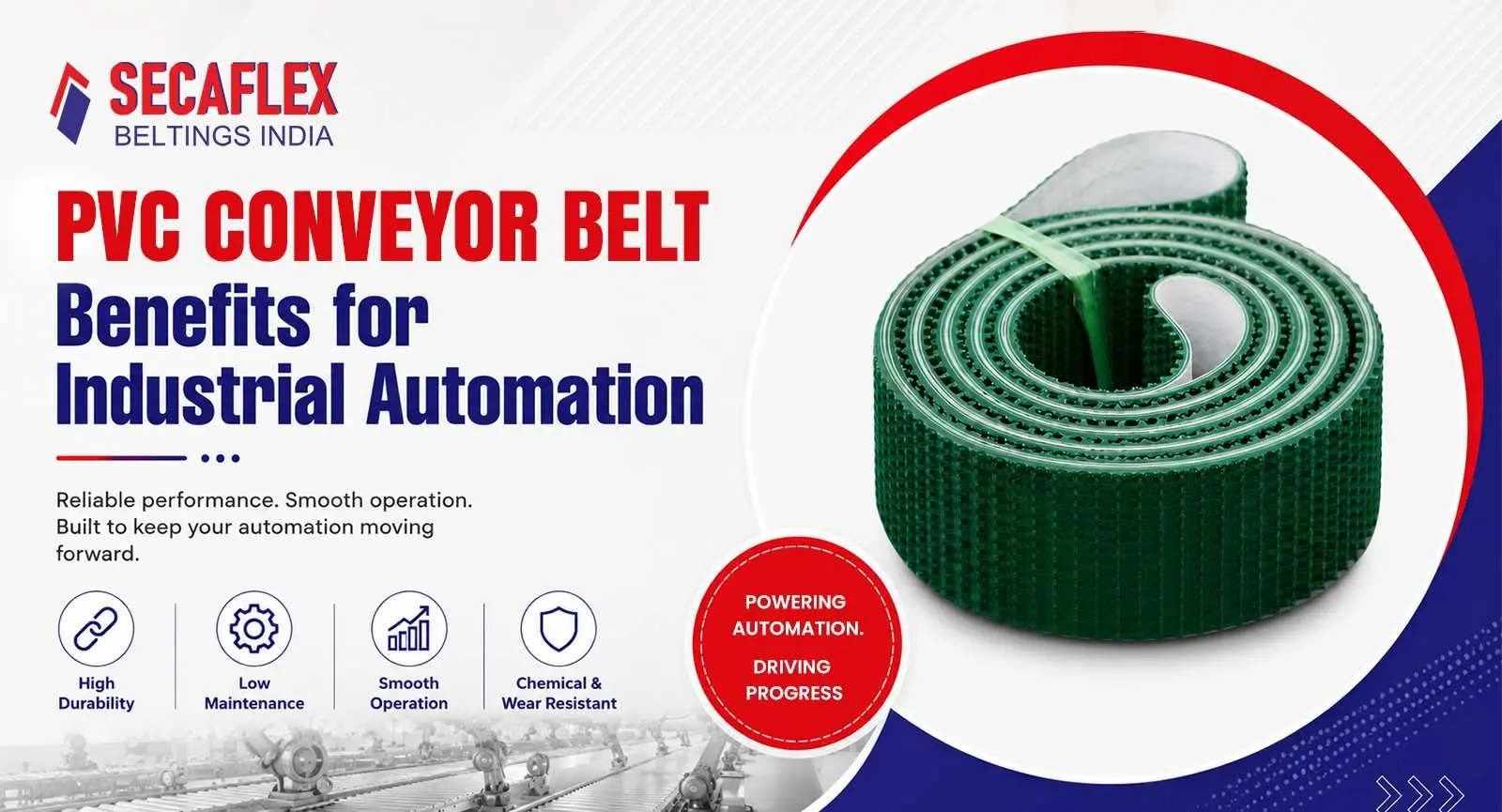
PVC stands for polyvinyl chloride, which is a type of synthetic plastic. The belt itself is not just a strip of PVC, though. It has a fabric core inside that gives it strength, with PVC coating on the outside that takes the wear and handles exposure to moisture, chemicals, and general abuse.
The fabric core is what stops the belt from stretching too much under load. The PVC outside takes the wear and stays easy to clean. That combination with the fabric core is what makes the belt light, tough, and worth using across different setups.
They come in different surface types, too. Smooth for flat products on level lines. Patterned for grip when products tend to slide. Cleated for inclined sections where things would roll back without something holding them in place.
How It Works
Two pulleys, one motor. The belt runs in a loop around both. The motor-driven pulley does the work, and everything on top moves with it. The other sits at the opposite end and keeps the belt tensioned. Material goes on at one end and comes off at the other.
What makes PVC conveyor belts work well in automated lines is that they do not stretch much. Low elongation means the belt stays consistent under load, which keeps product positioning accurate. In automated environments, accuracy matters because machines further down the line are expecting products to arrive at a specific point at a specific time.
The cleated versions handle slopes. The sidewall variants keep loose material contained on angled sections. Each configuration is built around a specific problem the standard flat belt cannot solve on its own.
Where PVC Conveyor Belts Are Used
Food and Beverage
Food production lines use them heavily. The material does not absorb moisture or oils, cleans easily, and does not introduce contamination risk. Whether it is moving packaged goods, loose produce, or components through a processing line, the belt handles it without issue.
Pharmaceuticals
Pharmaceutical lines need belts that are quiet, consistent, and resistant to cleaning chemicals. PVC ticks all three. Product positioning stays accurate across automated assembly and packaging operations, which is non-negotiable when you are dealing with dosage-sensitive products.
General Manufacturing and Assembly
Components moving between workstations, parts feeding into machinery, and finished goods heading to packaging. Most general manufacturing lines have at least one conveyor handling this kind of movement, and PVC is a practical and affordable choice for most of those applications.
Packaging Lines
Filling, sealing, labelling, palletising. Each of those stages needs products to arrive in the right place at the right time. PVC conveyor belts keep that movement steady and consistent at speed.
Logistics and Sorting
Distribution centres move a lot of varied load types, boxes of different sizes, parcels, and mixed goods. The belt handles that variation without needing constant adjustment, which keeps sorting and dispatch operations moving.
Why PVC Works Well for Industrial Automation
It handles wear
The outer PVC layer takes the contact. Products slide across it, abrasive materials move over it, and it holds up well over time. The fabric core underneath maintains its strength through extended operation. In automated environments running long shifts, that combination keeps downtime low.
Moisture and chemicals are not a problem
PVC does not swell, warp, or degrade from exposure to water, oils, or cleaning agents. For food processing and pharmaceutical environments in particular, that resistance is essential. The belt performs the same after cleaning as it did before.
Maintenance is minimal
Cleaning is straightforward. The belt does not need complex upkeep to stay in good condition. When a belt does need replacing or rejoining, the process is simpler than with more complex belt types. Less time off the line means more time producing.
Surface options cover most situations
Smooth, patterned, cleated. The right surface for the application means the belt does its job without the product behaving unpredictably on top of it. Most operations can find a PVC configuration that fits without needing to look at more expensive alternatives.
Antistatic where it matters
In electronics manufacturing or any environment where static discharge is a risk, antistatic PVC variants handle it. The belt prevents the kind of static build-up that could damage components or create a safety issue.
The cost makes sense
PVC conveyor belts perform well and cost less than many alternatives. Across a facility running multiple lines, that cost difference adds up. For operations that replace belts regularly, it is a practical consideration that is hard to ignore.
To Wrap Up
A conveyor belt is not a complicated piece of equipment, but picking the wrong one for the application causes problems that are entirely avoidable. PVC conveyor belts cover a wide range of industrial automation needs at a practical cost, with low maintenance and solid durability.
DKT Engineering Enterprises has been manufacturing and supplying these belts since 2010. If you are setting up a new line or replacing an existing belt, get in touch with the team and get help in finding the right fit for what the operation actually needs.
Frequently Asked Questions
How long will a PVC conveyor belt last before it needs replacing?
Can it handle wet or oily conditions?
What is the difference between smooth, patterned, and cleated belts?
Is it food safe?
Can the belt be customised for a specific line?

DKT Engineering Enterprises
DKT Engineering Enterprises has vast experience in manufacturing conveyor belts in India. We are providing high quality products to our clients Since 2010.
About Author

DKT Engineering Enterprises
DKT Engineering Enterprises has vast experience in manufacturing conveyor belts in India. We are providing high quality products to our clients Since 2010.