
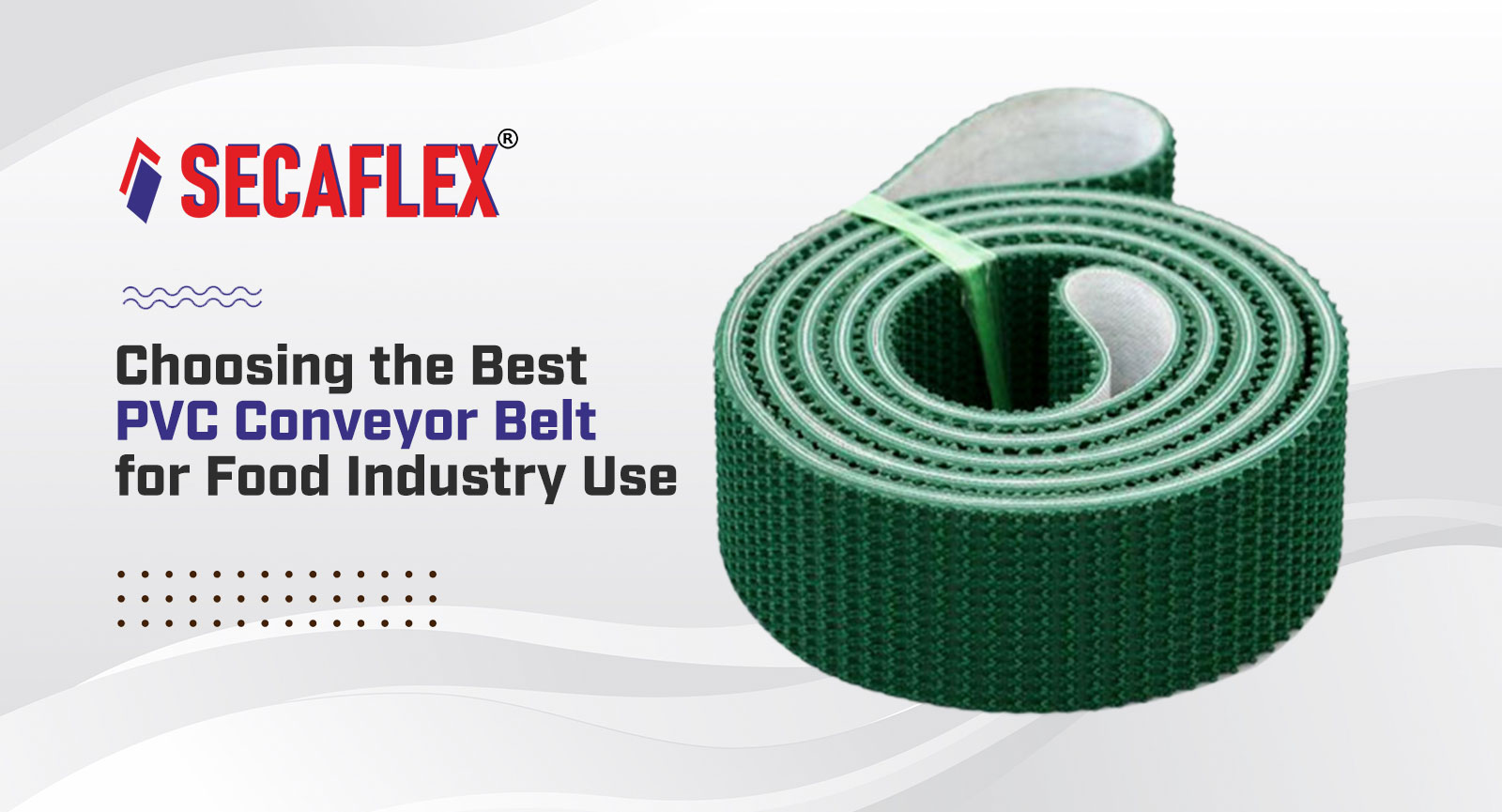
The PVC conveyor belt plays an important role in the food processing sector, where efficiency and safety are required at all stages of production. It is not only a basic conveyor tool but also a critical component in ensuring smooth and effective food processing. Choosing the appropriate conveyor belt not only eliminates typical production line problems like jamming, contamination, and product loss, but it also significantly increases overall process efficiency.
Conveyor belts must meet a variety of specifications due to the special needs of food processing. For example, when handling foods high in oils and fats, conveyor belts may be exposed to corrosion and erosion by oils and fats, necessitating the use of oil-resistant PVC conveyor belts, whereas in the case of highly viscous foods such as candies and chocolates, improperly designed conveyor belts may cause products to stick or slip, causing production line operation to be hampered.
Every modest advance in food processing, whether it’s careful material selection or structural design optimization, has the potential to greatly enhance efficiency. So, how can you select the best PVC belt for your requirements, which has become a critical concern for the future?
Food safety standards and the selection of PVC conveyor belts.
In the food processing business, PVC conveyors must be chosen not only for their primary purpose of material handling but also for their rigorous adherence to food safety requirements. Food processors frequently prefer conveyor belts that have been internationally certified for material safety, and polyvinyl chloride conveyor belts meet international standards such as the FDA and EU 10/2011, indicating that they emit no hazardous substances during food processing and are non-toxic and odorless. This is critical for guaranteeing food safety, especially when working with fresh food, as the safety of the material is directly tied to the quality of the finished product.
In addition to addressing food safety from a material standpoint, antimicrobial qualities play an essential role in the selection of PVC conveyor belts for the food processing sector. Antimicrobial-coated conveyor belts reduce bacterial development and are ideal for processing perishable items such as vegetables, fruits, and meat. The antimicrobial coating not only minimizes the danger of infection, but it also conforms with increasingly demanding hygiene laws throughout the world, giving businesses more confidence in market regulation.
Oil and Chemical Resistance
PVC conveyor belts with exceptional oil and grease resistance retain their physical qualities even in high-oil and grease settings. The surface material resists grease penetration and protects the belt from softening or breaking as a result of prolonged grease contact, extending its life and reducing maintenance requirements.
PVC conveyors’ chemical resistance is especially important when dealing with substances like acidic or alkaline meals. It resists corrosive chemicals, ensuring the conveyor belt’s integrity and stability. Even when exposed to chemicals over extended periods of time, PVC belts retain their physical qualities, preventing cracking or deterioration.
Temperature Adaptability
Polyvinyl chloride conveyor belts are one of the most popular alternatives in the food sector due to their excellent temperature adaptability, which allows them to remain stable in high-temperature situations while being flexible in low-temperature circumstances.
PVC conveyor belts’ temperature flexibility not only fits the needs of both high and low temperature conditions but also decreases downtime due to their endurance, making them a more dependable alternative for food processors. This conveyor belt’s capacity to respond to temperature swings makes it suitable for use in a variety of food processing procedures.
Anti-slip properties of PVC Conveyor Belts
Packaging also relies heavily on anti-slip qualities. Polyvinyl chloride conveyor belts’ high-friction surface keeps these goods stable on the belt, avoiding slippage or tipping at high speeds and providing a smooth packing process, particularly when precise placement and high speeds are necessary.
The use of a PVC conveyor with anti-slip qualities considerably improves conveyor safety during food processing and packaging. The optimized surface design provides the smooth transportation of various shapes and kinds of food products, eliminating line difficulties caused by slippage or tilting and increasing overall efficiency.
Conclusion
Using a PVC conveyor belt improves not only the performance and efficiency of your production line but also the safety and quality of the food being delivered. Companies that configure conveyor belts logically and sensibly may preserve a competitive advantage and ensure long-term sustainable development.

DKT Engineering Enterprises
DKT Engineering Enterprises has vast experience in manufacturing conveyor belts in India. We are providing high quality products to our clients Since 2010.
About Author

DKT Engineering Enterprises
DKT Engineering Enterprises has vast experience in manufacturing conveyor belts in India. We are providing high quality products to our clients Since 2010.