
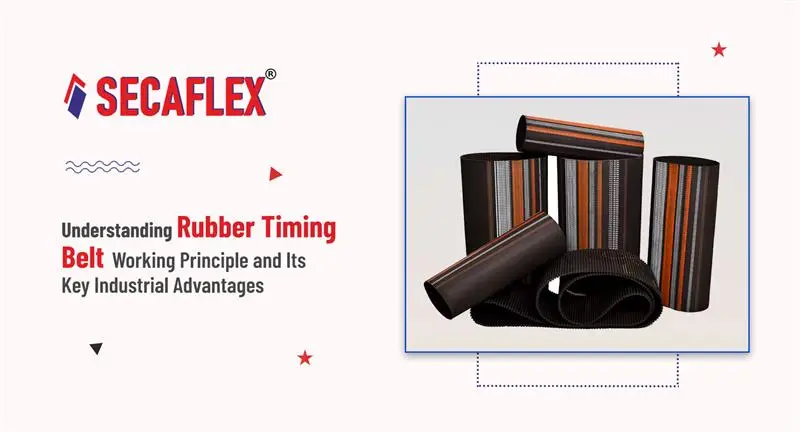
The timing belt, also known as a cam belt, is a crucial component in machines or engines. It is made from durable reinforced rubber and has teeth inside that help your engine operate smoothly by maintaining the camshaft and crankshaft in harmony. Rubber timing belts are important for the smooth movement of machines and prevent slippage. In this blog, you will learn more about this belt, its working principle, and its top advantages.
What exactly is a Rubber Timing Belt?
A timing belt is made from a durable rubber material. The belt is used in several machines to move parts at the correct time and order. It features small teeth on the inside of the belt. These teeth fit into matching grooves on a pulley or wheel. Because of this, the belt does not slip while moving. It turns smoothly and keeps everything perfectly in sync. This means the belt and pulley rotate together without losing timing.
How Does a Rubber Timing Belt Work?
The rubber timing belt’s working principle is very simple. The belt has teeth on its inner side that fit perfectly into the grooves of the pulley. When the motor or engine starts, it rotates the pulley. The belt teeth lock into the pulley grooves and move along with it.
Because the belt is tightly fitted, it does not slip. As the pulley turns, the belt carries the motion to another pulley and keeps both parts moving together in perfect timing. The belt transfers power smoothly and accurately, making sure all machine parts move at the right time and at the same speed.
Key Advantages of Rubber Timing Belt
1. They don’t slip
The best thing about a timing belt is the “teeth” on the inside. Unlike flat belts that can slide around when things get moving, these teeth lock into the gears. Toothed design prevents slippage, which means everything stays perfectly synced.
2. Quiet and Smooth Performance
Metal chains and gears produce a lot of noise. Rubber timing belts, on the other hand, run almost silently and smoothly.
3. These belts are very durable
These belts are made from high-quality rubber and reinforced with strong internal fibers. They can handle a lot of heat and friction without wearing out.
4. They need low maintenance
Rubber timing belts don’t need any constant lubrication. You basically install them and let them do their thing. It keeps your workspace cleaner and saves you a ton of time on maintenance.
5. They consume less energy
Because rubber is much lighter than heavy metal chains, it takes less energy to get the belt moving. They create very little friction, which means your motor doesn’t have to work as hard. These belts need very little energy to operate, which saves your electricity bills.
Common Uses of Rubber Timing Belts
Timing belts are used across many industries. You will find them in the following:
- Automobile engines
- Packaging machines
- Printing machines
- Packaging machinery
- Textile machines
- Conveyor systems
- CNC machines
- Medical and laboratory equipment
Final Thoughts
This blog explained the rubber timing belt working principle and advantages. This timing belt helps move machines smoothly. The belt has a simple working, low noise operation, and less maintenance needs.
DKTEE is a trusted brand that manufactures and sells high-quality belts. We use the best quality materials to make these timing belts, so they last longer. If you need a customized timing belt, we can make it according to your specifications. For more information, contact us today.

DKT Engineering Enterprises
DKT Engineering Enterprises has vast experience in manufacturing conveyor belts in India. We are providing high quality products to our clients Since 2010.
About Author

DKT Engineering Enterprises
DKT Engineering Enterprises has vast experience in manufacturing conveyor belts in India. We are providing high quality products to our clients Since 2010.